A gap in the torsion spring
A separated coil above the door usually means the torsion spring has snapped. Leave the door closed and avoid touching the shaft or winding hardware.
Serving Monticello, Florida
Get a worn or broken spring replaced, the tension set correctly, and the door checked for balanced movement before the opener goes back to work.
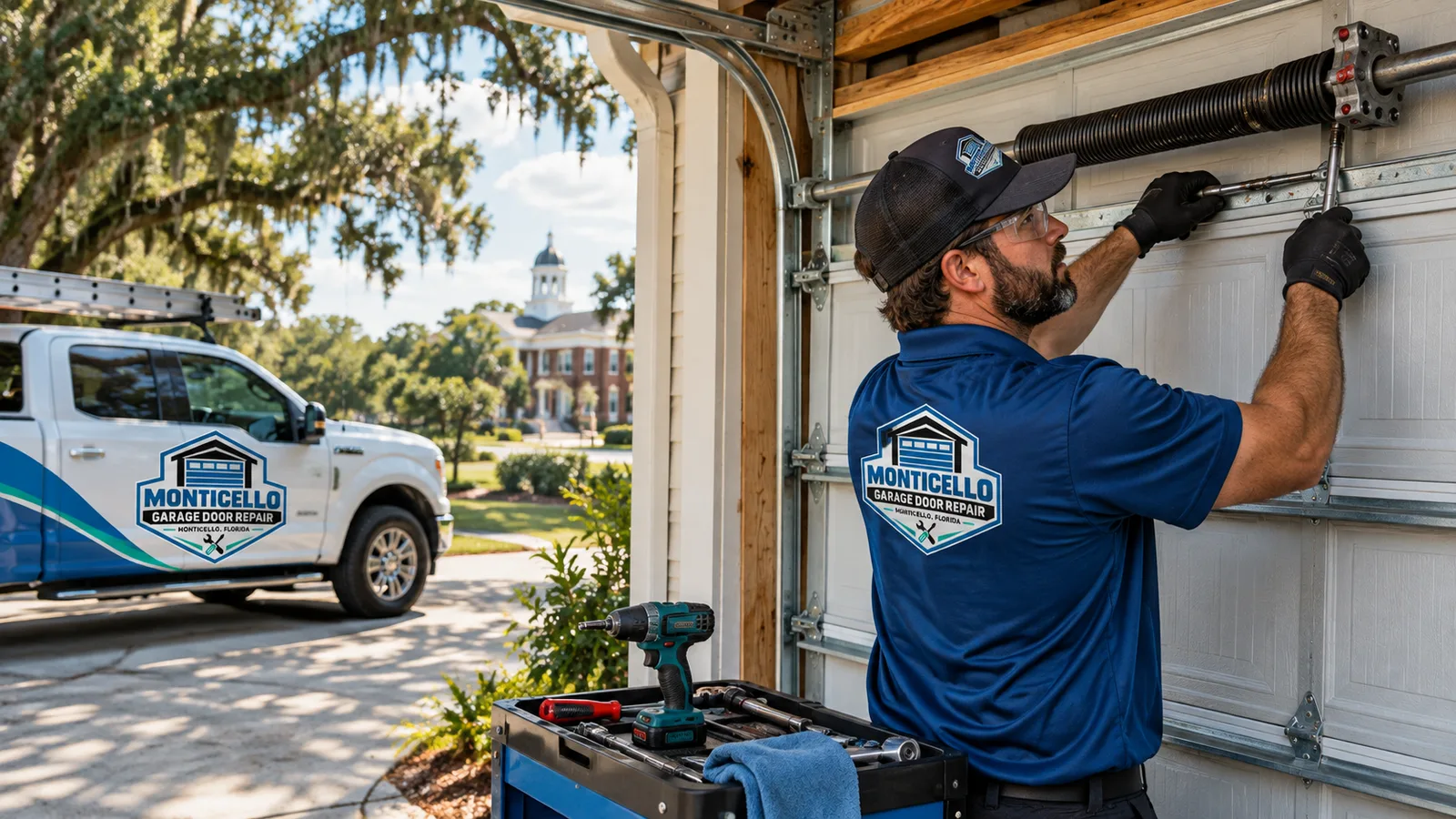
For garage door spring repair in Monticello, FL, the first priority is identifying the spring system and keeping the door from moving until it can be handled safely. A snapped torsion spring often leaves a visible gap in the coil above the door. A failed extension spring may hang loose beside an overhead track. In either case, the door can become extremely heavy because the springs are no longer counterbalancing its weight.
Monticello Garage Door Repair checks the spring setup, cables, drums, tracks and attachment points before replacement work begins. As Monticello's garage door specialists, we match the replacement to the door rather than choosing a spring by appearance alone. Door weight, height, track configuration, spring dimensions and wire size all affect the correct part and tension.
Do not keep pressing the opener after a spring breaks. The opener is designed to move a properly balanced door, not lift its full dead weight. Repeated attempts can strain the motor or damage the top door section. Keep people and vehicles clear, leave the door closed when possible, and arrange an inspection.
Torsion springs sit on a shaft above the opening and transfer torque through cable drums. Extension springs stretch along the horizontal tracks and use cables, pulleys and safety containment cables. These systems require different parts, tools and adjustment methods.
A torsion spring replacement starts with confirming the door's spring specifications and inspecting the shaft, center bearing plate, end bearing plates, drums and lift cables. After the correct spring is installed, winding tension is applied in controlled increments. The door is then moved by hand to check whether it stays near waist height without dropping hard or rising on its own.
With an extension system, both sides must work together. The technician checks the springs, pulleys, cables and anchor points, then adjusts the system so the door lifts evenly. Paired springs generally should be replaced together when they have shared the same service cycle. Replacing only one can leave the door uneven because the older spring and new spring may not carry the load in the same way.
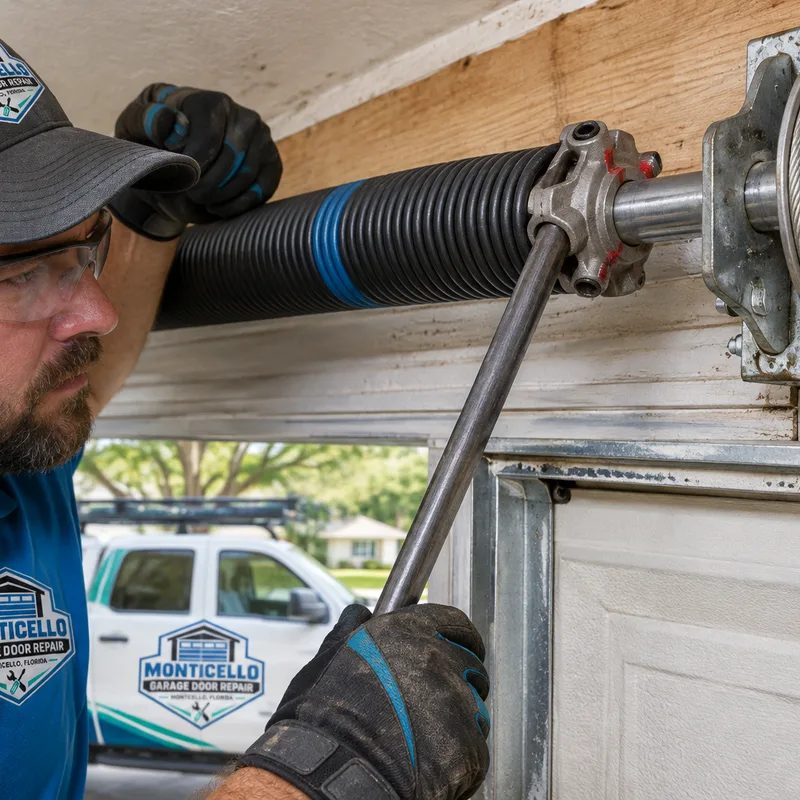
A separated coil above the door usually means the torsion spring has snapped. Leave the door closed and avoid touching the shaft or winding hardware.
Disconnecting the opener should reveal a door that can be moved with controlled effort. A door that is extremely heavy may have lost spring assistance.
A tilted door can point to a failed spring, a cable that has left its drum, or unequal tension. Continuing to run it can pull rollers and tracks out of alignment.
A humming motor, rail movement or partial lift does not prove the opener is at fault. A broken spring can prevent an otherwise working opener from moving the door.
A spring may make a sharp sound when it breaks. Extension-system parts can also move suddenly if a spring or cable fails.
A properly balanced door should not slam down or shoot upward during a manual balance check. Either behavior calls for tension and hardware inspection.
Monticello Garage Door Repair begins with the door in a controlled position. The technician identifies the spring system and checks whether cables, drums, pulleys or track hardware were affected by the failure.
The door and existing spring setup are measured. Spring length, inside diameter, wire size, wind direction and door weight are relevant for torsion systems; extension springs are matched to the load they must counterbalance.
Stored tension is controlled with the proper tools before hardware is removed. A spring should never be cut, loosened or wound with improvised bars or hand tools.
The replacement spring or spring pair is installed and adjusted for the door. Lift cables are seated correctly on the drums or routed through the extension-system pulleys.
The door is moved manually through its travel and checked at several positions. Once it lifts evenly and holds a reasonable balance, the opener is reconnected and its movement is observed.
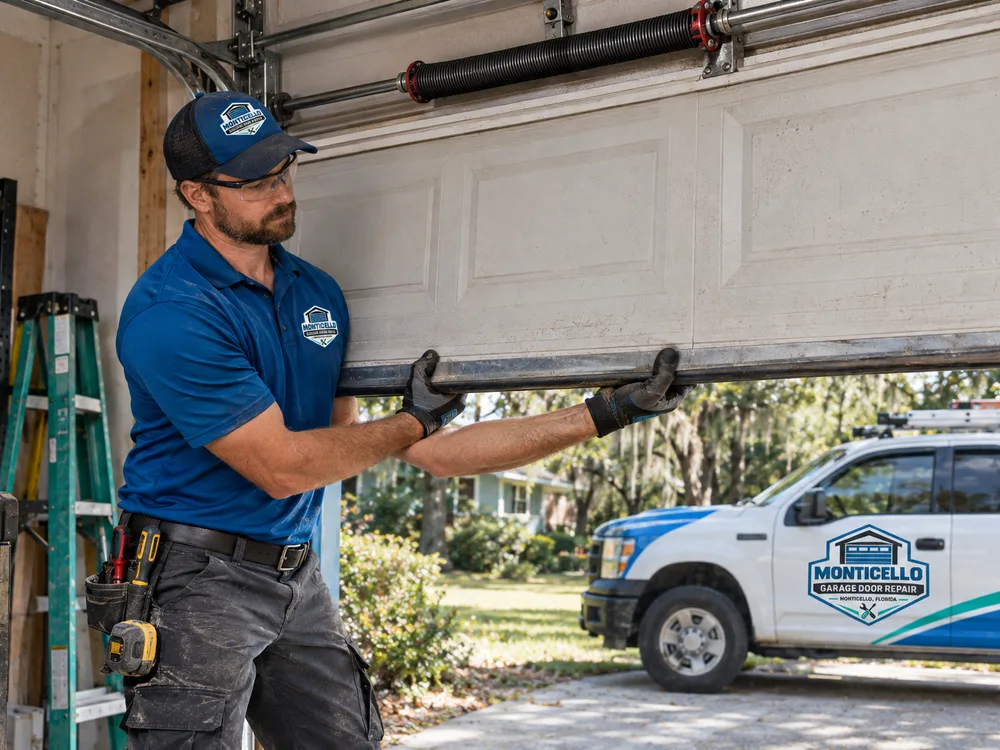
Garage door springs work under load every time the door opens and closes. In North Florida, heat and humidity can also contribute to surface corrosion on springs, cables and other exposed steel hardware. Rust does not automatically mean a spring is about to break, but heavy corrosion, stretched coils, frayed cable strands or movement at an anchor point deserve attention.
Seasonal storms can interrupt power, which leads some homeowners to discover a weak spring when they pull the opener's emergency release. If the spring system is working properly, the door should still be manageable by hand. If it drops, binds or feels too heavy to control, lower it carefully if that can be done safely and stop operating it.
Spring work is not a appropriate do-it-yourself repair. Torsion springs store rotational force, while extension springs can recoil along the track when a cable or anchor fails. Proper winding bars, locking tools and a clear understanding of the lift system are required to control that force.
A broken spring rarely improves with another attempt at the opener. Arrange an inspection before added strain reaches the cables, door sections or drive system.
CALL NOW: (850) 427-6006It is safer to leave the door closed until the spring system is inspected. A door without spring assistance can be too heavy to control, and forcing it open may allow a lift cable to loosen or leave its drum. If a vehicle is trapped, tell Monticello Garage Door Repair about that situation when arranging service.
Paired springs are generally replaced together when they have operated through the same service cycle. Matching springs help carry the door evenly, while leaving one older spring in place can result in unequal force and another repair soon afterward. The technician can confirm whether the door uses a matched pair or a single-spring design.
A straightforward residential spring replacement is often completed in one service visit, but the exact time depends on the spring system and any related damage. A cable off its drum, worn bearing, bent shaft or damaged attachment point adds inspection and repair time. The door should be balanced and tested before normal operation resumes.
The correct spring is selected from the door load and the spring system's physical specifications. For torsion springs, technicians consider wire size, inside diameter, overall length and wind direction. Door height, drum type and the number of springs also matter. Matching by color or visual similarity alone is not reliable.
A broken spring does not automatically mean the opener must be replaced. The opener may stop, reverse or strain because the door has become too heavy. After Monticello Garage Door Repair restores the spring balance, the opener can be tested separately for normal travel, force response and connection to the door.
A noisy spring can be inspected, but sound alone does not identify the cause. Noise may come from dry coils, rollers, hinges, bearings or a cable rubbing near a drum. In Monticello's humid climate, the inspection should also look for corrosion and frayed steel cable strands rather than relying only on lubrication.
Tell Monticello Garage Door Repair what the door is doing, whether the spring has a visible break, and whether a vehicle is trapped. The action is to inspect the lift system, identify the correct spring and confirm the repair scope.