Opener repair in Monticello, Florida

Garage Door Opener Repair Monticello FL

Get a clear diagnosis for a humming motor, unresponsive controls, intermittent operation, or a door that reverses before it closes.

Door and opener tested together
Controls and safety sensors checked
Serving Monticello, Florida
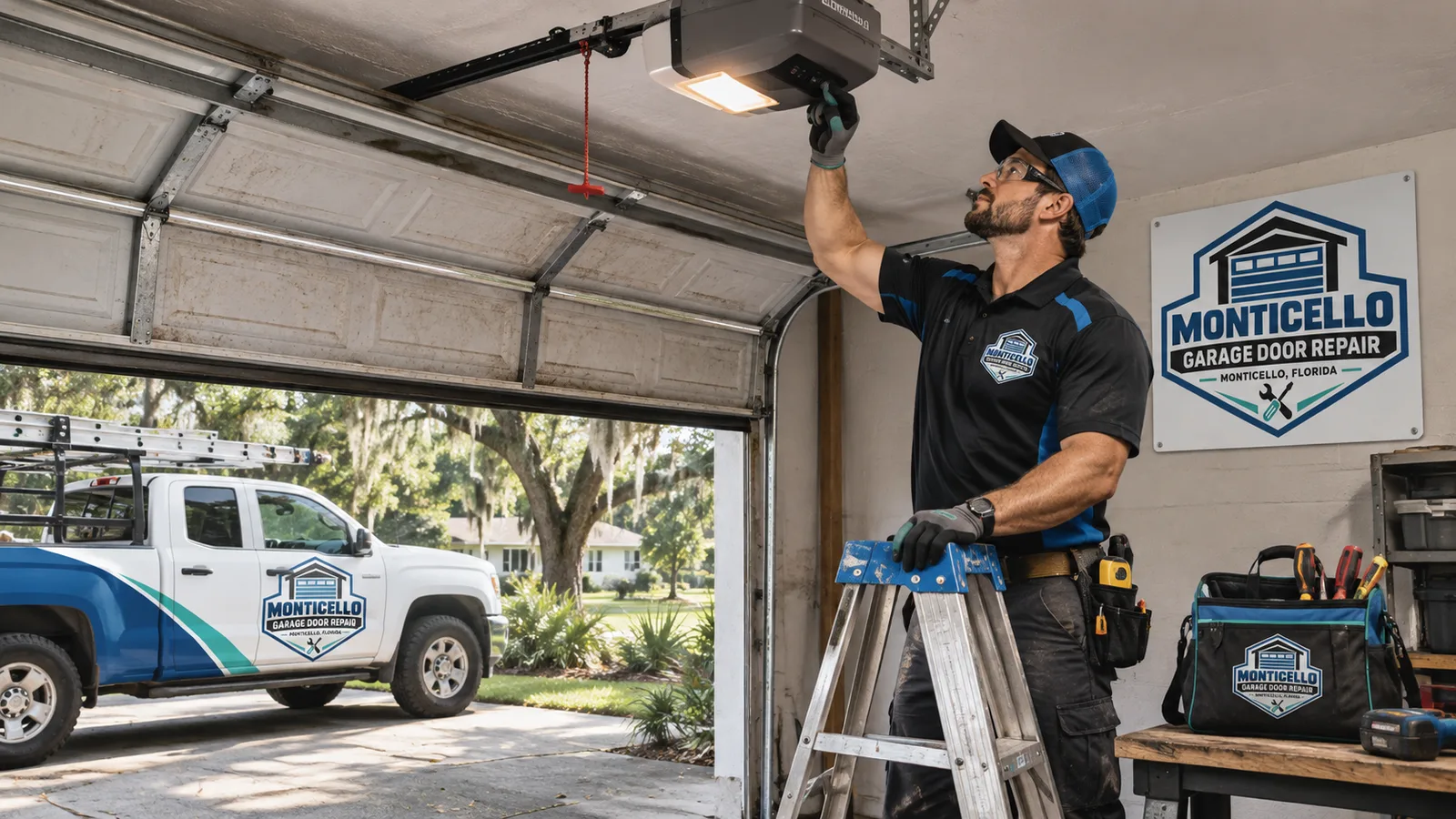
Technician testing a ceiling-mounted garage door opener while a residential door is partially open

Clear Opener Troubleshooting and Repair

When the motor runs but the door stays put, the remote suddenly stops responding, or the door reverses near the floor, you need more than trial-and-error adjustments. Monticello Garage Door Repair provides garage door opener repair in Monticello, FL, with attention to both the opener and the door it operates.

An opener can appear faulty when the real problem is a binding door, broken spring, blocked photo eye, disconnected trolley, loose power connection, or incorrect travel setting. Testing the complete system matters because replacing an opener component will not correct excessive door resistance. Monticello Garage Door Repair, a professional garage door company in Monticello, approaches the work by identifying the symptom, testing likely causes, and explaining the repair before continueing.

North Florida heat and humidity can be hard on garage equipment. Dust, insects, moisture, and accidental movement of stored items can interfere with low-mounted safety sensors. Thunderstorms and power interruptions may also lead homeowners to suspect the motor when the outlet, circuit, surge protection, or control settings should be checked first.

Common symptoms

Garage Door Opener Problems We Diagnose

The Motor Hums but the Door Does Not Move

A humming unit may have a stripped internal drive gear, jammed trolley, failed capacitor, or a door that is too difficult for the opener to lift. Stop repeated activation until the door and opener can be tested.

Remote or Keypad Will Not Respond

Fresh batteries do not solve every control problem. A remote may need reprogramming, the keypad may have failed, the lock function may be active, or the receiver may not be accepting a signal.

Door Reverses While Closing

Misaligned photo eyes, dirty lenses, damaged sensor wiring, an obstruction, or incorrect down-travel settings can cause reversal. Safety devices should be tested rather than bypassed.

Opener Runs but the Door Stays Closed

The emergency-release trolley may be disconnected, a drive component may have failed, or the door itself may be stuck. The door should move smoothly by hand before the opener is blamed.

Lights Work but Nothing Else Happens

Wall-control wiring, an activated vacation lock, a faulty logic board, or an electrical issue may prevent operation even though the opener still has power.

Movement Is Noisy or Uneven

A loose chain, worn belt, damaged sprocket, incorrect force setting, or resistance in the door hardware can produce jerking and unusual noise. The source should be found before adjustments are made.

CALL NOW: (850) 427-6006

Garage Door Opener Repair in Monticello, FL Starts With the Door

A garage door opener is designed to guide a balanced door, not lift the door's full weight. With the trolley disconnected, a properly functioning door should move without severe binding and remain reasonably controlled through its travel. If it drops, shoots upward, or feels unusually heavy, the counterbalance system needs attention before the opener is run again.

The diagnosis then moves to the power source, wall station, remotes, keypad, safety sensors, trolley, rail, drive system, travel limits, and force settings. Chain-drive openers may develop chain or sprocket trouble. Belt-drive units can have worn belts or internal gear damage. Screw-drive systems have different lubrication and carriage concerns. Direct-drive and jackshaft units require model-specific testing.

Monticello Garage Door Repair also checks the model information and visible condition of the unit. That helps determine whether a repair part is available and whether repairing the existing opener makes appropriate sense. The goal is a specific recommendation based on what failed, not an automatic push toward replacement.

CALL NOW: (850) 427-6006
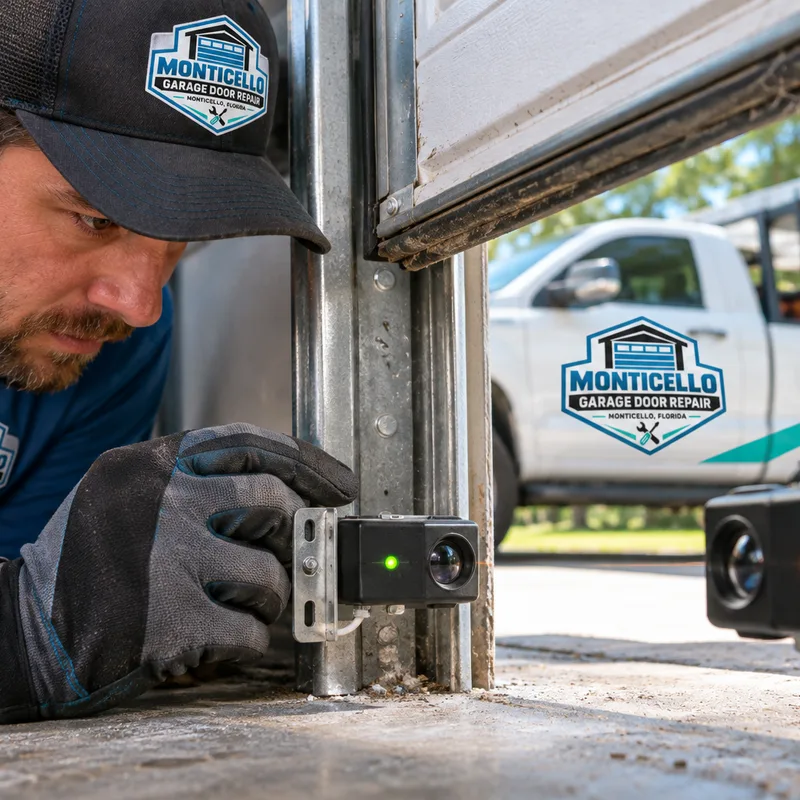
Garage door opener photo-eye sensors near the floor with their lenses and alignment indicators visible
Photo eyes must face each other across the opening and remain clear of obstructions.
The service process

What to Expect During Opener Service

  1. 01

    Describe the Failure

    Explain what happens at the wall control, remote, or keypad and whether the problem is constant or intermittent. Mention recent power interruptions, unusual noises, or manual operation.

  2. 02

    Inspect the Door and Opener

    The door's balance and movement are checked along with the opener rail, trolley, drive components, wiring, controls, photo eyes, and power supply.

  3. 03

    Isolate the Cause

    Relevant components are tested so the recommendation addresses the actual fault. This may include checking sensor alignment, control signals, travel limits, force response, or internal wear.

  4. 04

    Inspect the Repair

    Monticello Garage Door Repair explains the findings and the proposed work. If repair is not sensible because of extensive damage, unavailable parts, or the unit's condition, replacement can be discussed separately.

  5. 05

    Test Normal and Safety Operation

    After approved work, the opener is cycled and its controls are checked. Photo-eye reversal and the door's movement are tested before the work is considered complete.

CALL NOW: (850) 427-6006
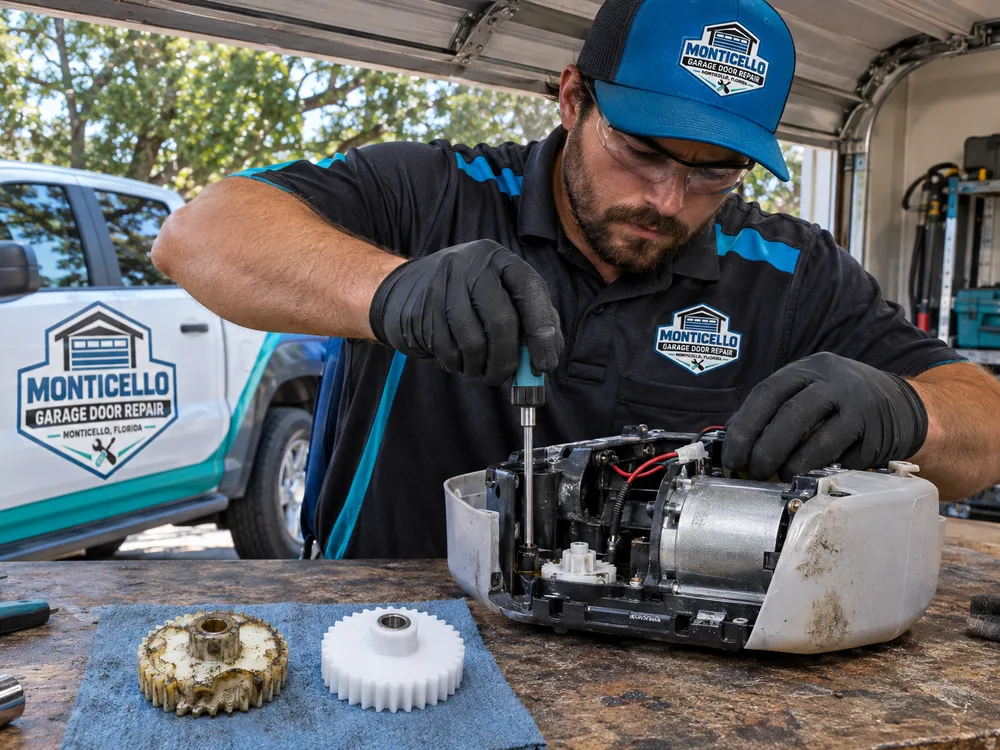
Worn garage door opener drive gear and a clean replacement gear beside an opened motor housing

Repair or Replace the Opener?

Repair is often reasonable when one serviceable component has failed and the rest of the opener is in sound condition. Examples include a damaged wall control, misaligned sensor, worn gear kit, faulty capacitor, or failed remote. Availability and amount of the correct part still matter.

Replacement may deserve consideration when the motor assembly or logic board has extensive damage, several major components are worn, parts are unavailable, or the opener lacks functions the property owner now needs. The door's size and construction also affect the choice of replacement unit. Horsepower or horsepower-equivalent ratings should be matched to the door rather than selected by guesswork.

Do not use a larger opener to compensate for a door that is heavy because of a spring or hardware problem. A stronger motor does not correct poor balance, and continued operation can damage the new unit. Monticello Garage Door Repair separates door-related resistance from an opener failure before discussing the sensible action.

CALL NOW: (850) 427-6006

If the opener is straining, reversing, or operating unpredictably, arrange an inspection before repeated cycling causes additional wear.

CALL NOW: (850) 427-6006
Homeowner guidance

Garage Door Opener Repair Questions

Why does my garage door opener hum without lifting the door?

A humming opener commonly points to a jam, failed capacitor, stripped drive gear, damaged trolley, or a door that is too heavy to move. Disconnect the opener only if the door is fully closed and can be handled safely. Monticello Garage Door Repair can test the door balance and drive components to separate an opener fault from a spring or hardware problem.

Can safety sensors be repaired when the door will not close?

Yes, many closing problems can be corrected by cleaning, aligning, securing, rewiring, or replacing the photo-eye sensors. The sensors sit close to the floor, where dust, moisture, insects, and stored objects can interrupt the beam. They should never be bypassed because they are part of the opener's entrapment-protection system.

Why does the wall button work when the remote does not?

If the wall control works, the problem is often limited to the remote battery, programming, transmitter, lock setting, or receiver compatibility. Nearby interference can also reduce reliable range. The remote model and opener model should be checked before a replacement transmitter is purchased.

Can an opener be repaired during one service visit?

Many adjustments, programming issues, sensor problems, and common component failures can be handled during one visit, but timing depends on diagnosis and part availability. Model-specific boards, motors, belts, sprockets, or gear assemblies may require a separate part. The inspection determines the likely repair path.

Should I operate the garage door manually while the opener is broken?

Manual operation is appropriate only when the door is fully closed before release and remains balanced and controllable after disconnection. Do not pull the emergency release while the door is open or use it if the door is crooked, unusually heavy, or has a damaged spring or cable. An uncontrolled door can fall quickly.

Why does my opener work only sometimes after a storm or outage?

Intermittent operation after North Florida storms may involve a tripped breaker, GFCI-protected outlet, lost programming, surge damage, or a logic-board fault. Confirm that the outlet has power and try the manufacturer's reset procedure only if it is available for the exact model. Persistent symptoms call for electrical and control testing.

Will a new remote work with any garage door opener?

No, the remote must be compatible with the opener's manufacturer, model, frequency, and programming system. A universal remote may support several product families but not every unit. Bring or photograph the opener's model label so compatibility can be checked accurately.

Does Monticello Garage Door Repair work on different opener types?

Monticello Garage Door Repair can evaluate chain-drive, belt-drive, screw-drive, direct-drive, and wall-mounted opener problems. The available repair depends on the exact model, failed component, overall condition, and whether the manufacturer still supplies compatible parts.
Arrange an opener inspection

Get Your Garage Door Opener Working Properly

Tell Monticello Garage Door Repair what the opener is doing, when the trouble started, and which controls still respond. A focused inspection can identify the failed component and clarify whether repair or replacement makes better sense.