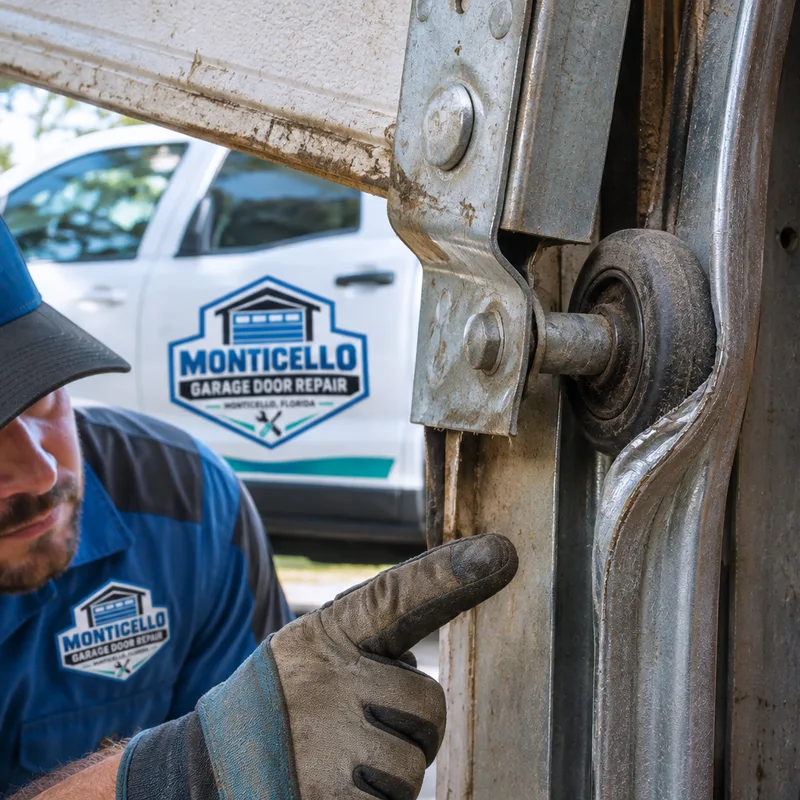
A roller is outside the rail
One or more rollers may be beside the track, caught at its edge, or resting against a bent track lip. Continued movement can displace more rollers.
Serving Monticello, Florida
Get a jammed or crooked garage door assessed before another cycle bends the track, damages more rollers, or leaves the opening unsecured.
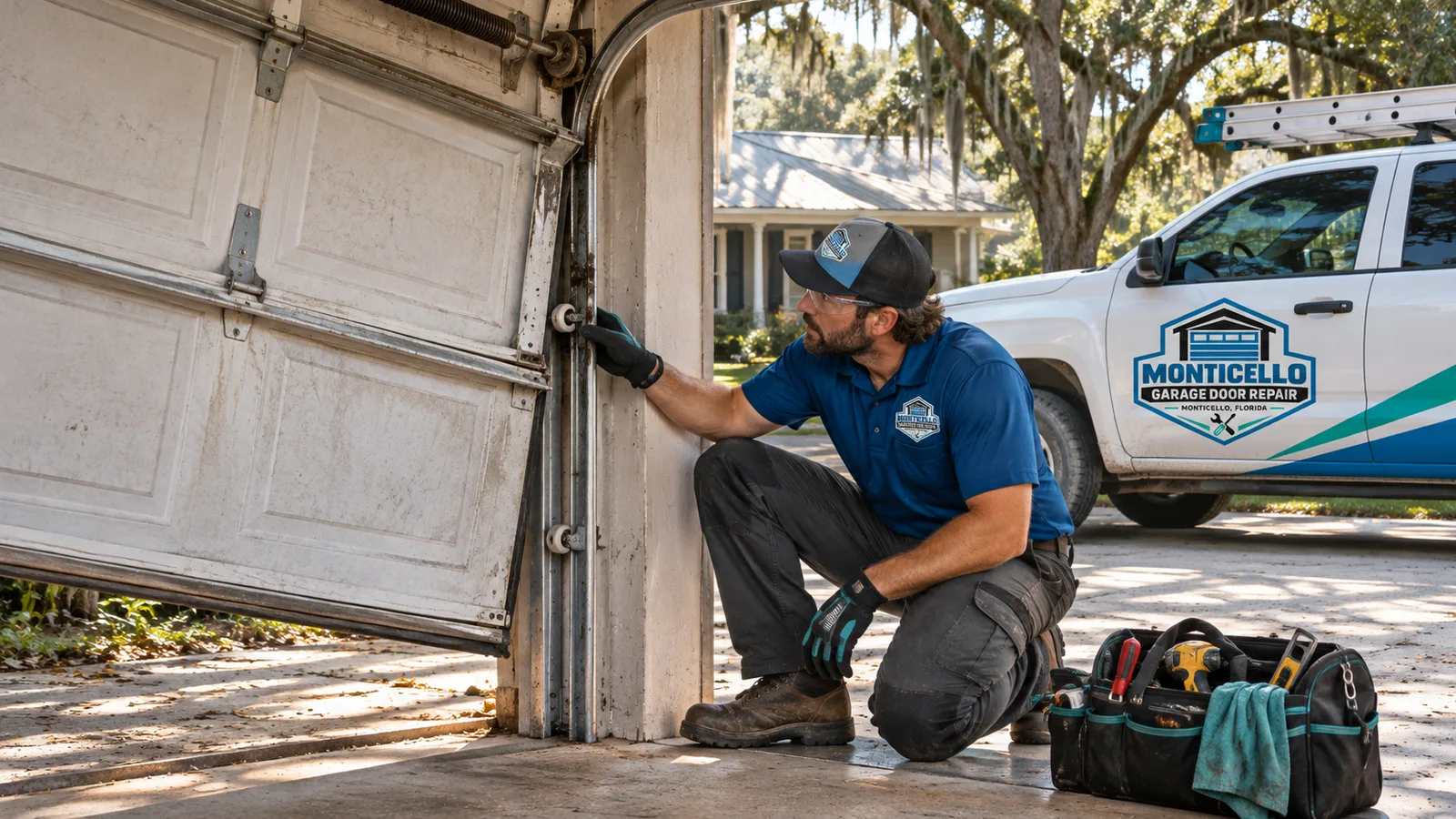
If a roller has jumped the rail or the door is hanging unevenly, garage door off track repair in Monticello, FL should begin with the door left in place. Do not press the opener again or try to force the door by hand. A door in this condition can bind, drop farther, pull additional rollers out, or bend the track.
Monticello Garage Door Repair inspects the full door system before attempting realignment. Our garage door specialists serving Monticello, FL look for the event that displaced the door rather than treating a crooked roller as an isolated problem. Common causes include an impact near the opening, a loose track bracket, worn rollers, an obstruction, frayed lift cable, or uneven cable tension.
Keep people, pets, and vehicles away from the opening while the door is unstable. If the door is partly open, do not stand beneath it. Disconnecting an automatic opener may prevent another powered cycle, but it does not make the door safe to lift because the door's weight and spring tension remain in the system.
One or more rollers may be beside the track, caught at its edge, or resting against a bent track lip. Continued movement can displace more rollers.
A crooked bottom edge often points to unequal cable tension, a displaced roller, or a cable that has slipped or failed on one side.
Binding may occur where a track is dented, twisted, misaligned, or pulled away from its mounting brackets.
Lift cables work under tension and should not be handled. A loose cable can allow one side of the door to move differently from the other.
Loose jamb brackets or missing fasteners can change track spacing and keep the rollers from traveling on the intended path.
An opener is not designed to pull a jammed door back into alignment. Stop the cycle rather than asking the motor and top section to overcome the obstruction.
A proper repair starts by securing the door so its weight cannot shift unexpectedly. The inspection then follows the complete travel path: vertical tracks, curved track sections, horizontal tracks, rollers, hinges, track brackets, lift cables, drums, springs, and the opener connection.
The repair method depends on what moved and why. A displaced roller may be guided back into an undamaged rail after the door is stabilized. Loose brackets can be reset so the tracks remain properly spaced and plumb. Minor track deformation may be corrected when the metal can still guide the rollers safely. A severely creased, split, or twisted track may need replacement rather than reshaping.
Cable condition matters as much as track alignment. If one cable has come off its drum or has frayed, simply returning the roller to the rail does not correct the lifting imbalance. Monticello Garage Door Repair identifies the failed or shifted component, completes the appropriate correction, and checks manual travel before reconnecting or testing the opener.
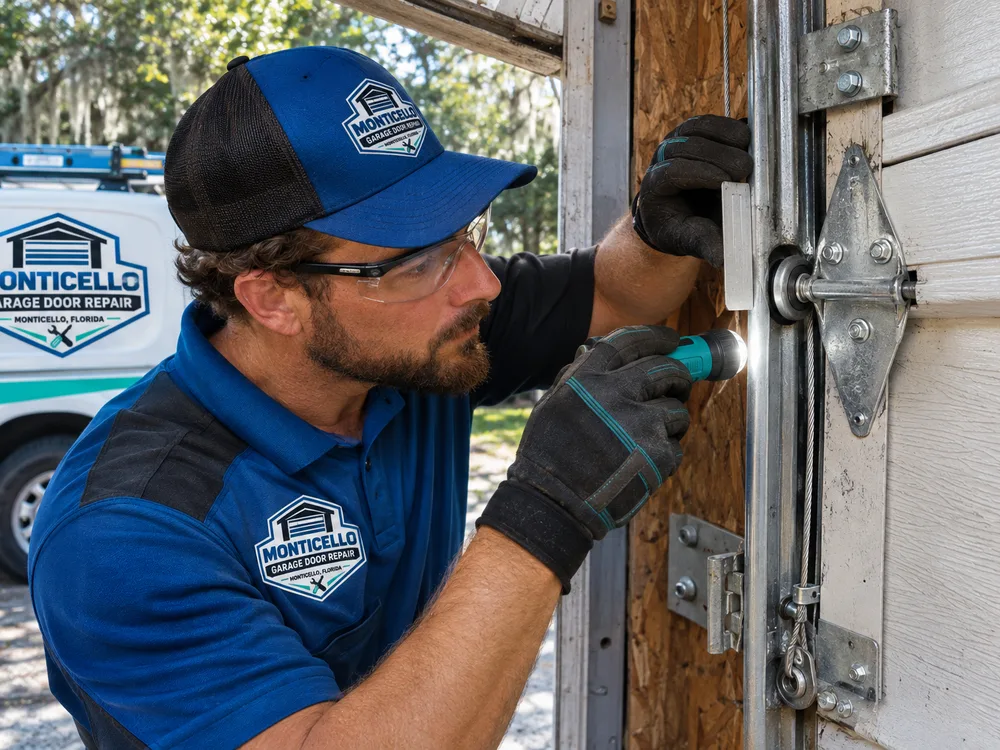
The first task is controlling the door's position. Clamps and other appropriate supports may be used to prevent unintended travel while the cause is assessed.
The technician checks where the roller left the track and examines nearby hinges, brackets, fasteners, cables, drums, springs, and panels for related damage.
Depending on the findings, work may include resetting rollers, aligning track sections, tightening or replacing track hardware, correcting a cable issue, or replacing a damaged component.
The rollers need enough clearance to travel without binding, but the tracks cannot sit so far away that the rollers can escape. Brackets and track position are adjusted accordingly.
Manual movement reveals resistance and imbalance that an opener can mask. The door should travel through its path without rubbing, catching, or shifting sideways.
After safe manual travel is confirmed, the opener and safety functions can be tested as applicable. The final check includes observing the door through a complete cycle.
An off-track door is usually the visible result of another fault. A vehicle, mower, or stored item can strike the lower track and narrow the roller path. Hardware can loosen as the door cycles, allowing a vertical track to shift. Worn roller bearings may drag instead of rolling clearly, while a deteriorated cable can leave one side without equal support.
North Florida's humid, wet conditions can contribute to corrosion on unprotected steel hardware. Rust around track fasteners, roller stems, cable strands, and bottom fixtures deserves attention because these parts help guide or support a heavy moving door. Wind-driven debris and leaves can also collect near the lower tracks. Keeping the floor and track area clear reduces the chance that an object will interfere with the bottom roller.
Track lubricant is not a substitute for alignment. The tracks generally need to remain clean rather than coated with grease that captures grit. If rollers are designed for lubrication, the appropriate lubricant is applied to their bearings or stems, not used to conceal a bent rail. Never loosen bottom fixtures, springs, cable drums, or lift cables. Those components can carry substantial tension even when the door appears stuck.
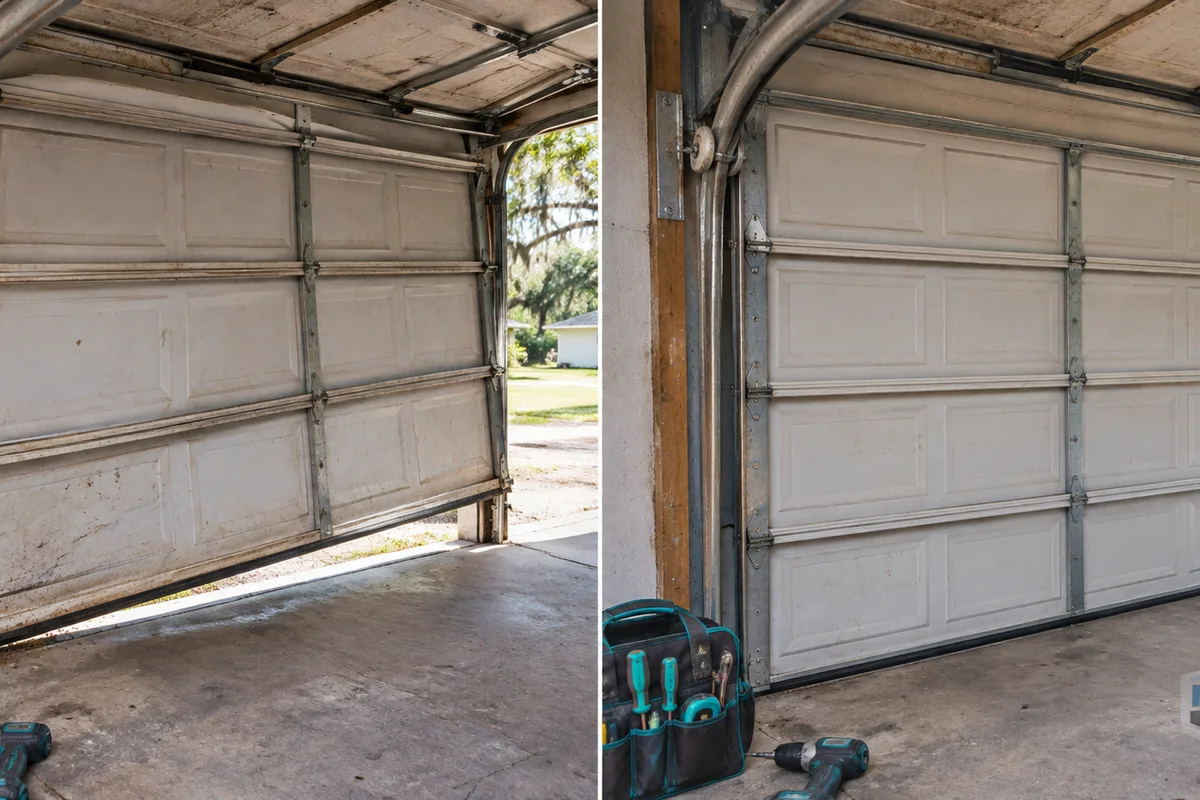
No, forcing an off-track door closed can cause it to drop, twist, or pull more rollers from the rails. In Monticello, keep the opening clear and leave the door at its current position until it can be secured and inspected. Do not loosen cables, springs, bottom brackets, or cable drums.
Yes, tracks may be reusable when they remain structurally sound and can be returned to correct alignment. A track with a severe crease, split mounting point, damaged curve, or lasting twist may require replacement. Monticello Garage Door Repair determines this after checking the rail, brackets, rollers, and door sections.
A straightforward realignment may be completed during one service visit, while cable, track, roller, or panel damage can add time. The door's position also affects the work. A door hanging partly open must first be stabilized before repair and testing can begin.
No, an automatic opener should not be used to pull a displaced door back into its rails. The opener arm can bend a door section, strain the motor, or worsen the misalignment. The door should be secured, repaired, and tested manually before powered operation resumes.
A loose cable does not always mean a roller has left the track, but it can make the door rise unevenly and lead to displacement. Cable drums, springs, and lift cables are tensioned parts. Stop operating the door and arrange an inspection rather than trying to rewind the cable.
Do not force the garage door or stand under a crooked, partly open door. Tell Monticello Garage Door Repair that a vehicle is trapped and describe whether the door is closed, partly open, or visibly hanging. That information helps clarify the door's condition before the service visit.
Yes, a bent section can change hinge and roller alignment enough to make the door bind or pull a roller toward the track edge. The inspection should cover the affected panel, hinges, roller stems, and both tracks before deciding whether realignment alone is sufficient.
A displaced roller can turn into track, cable, panel, or opener damage with another attempted cycle. Arrange an assessment while the door remains in its current position.
CALL NOW: (850) 427-6006Tell Monticello Garage Door Repair what the door is doing, whether it is open or closed, and where the rollers or cables appear displaced. The action is a focused inspection and a clear repair scope.